The most common reasons Florida insurers reject a 4-point inspection — electrical, plumbing, HVAC, and roof issues to fix before you schedule.
A 4-point inspection looks at the four systems insurers care about most: electrical, plumbing, HVAC, and roof. If any of them is at the end of its life or has known defects, the carrier may decline coverage or require a fix before binding. Here's what we see fail most often in Pinellas County homes.
Electrical
Federal Pacific, Zinsco, or Challenger panels — almost always declined
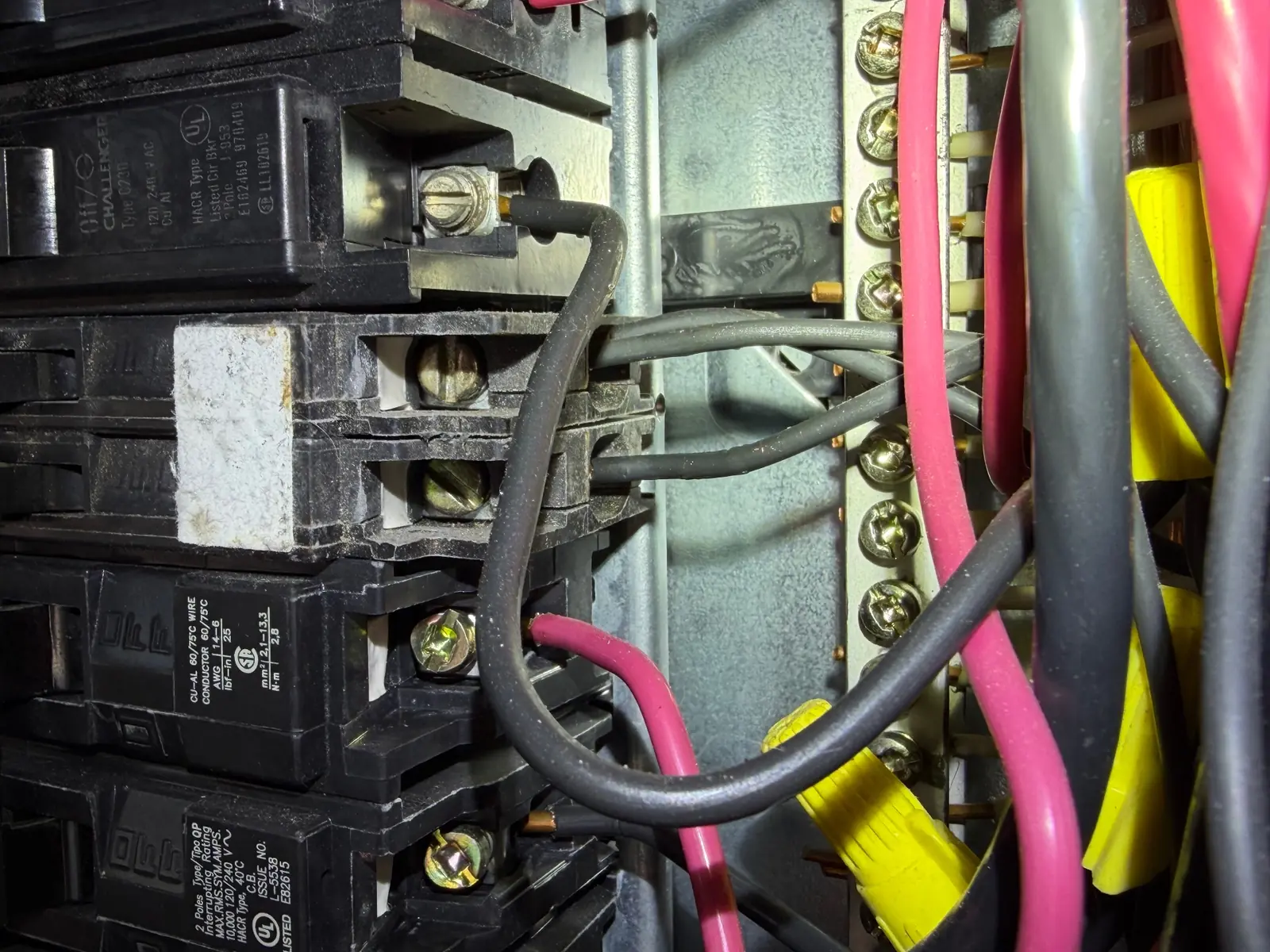
Double-tapped breakers — two wires under one breaker lug (not listed for it)
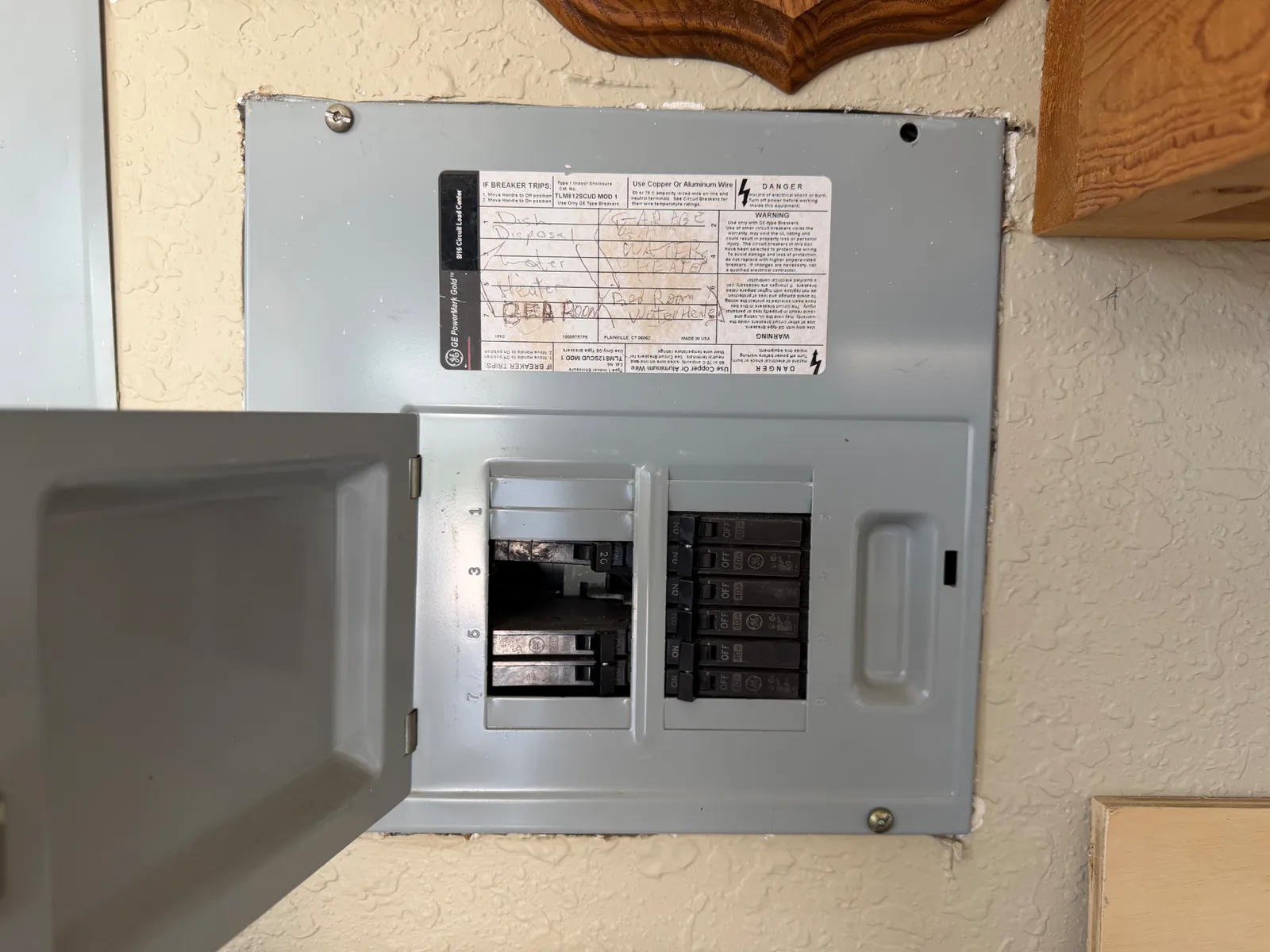
Empty breaker slots / missing fillers — exposed bus bars inside the panel
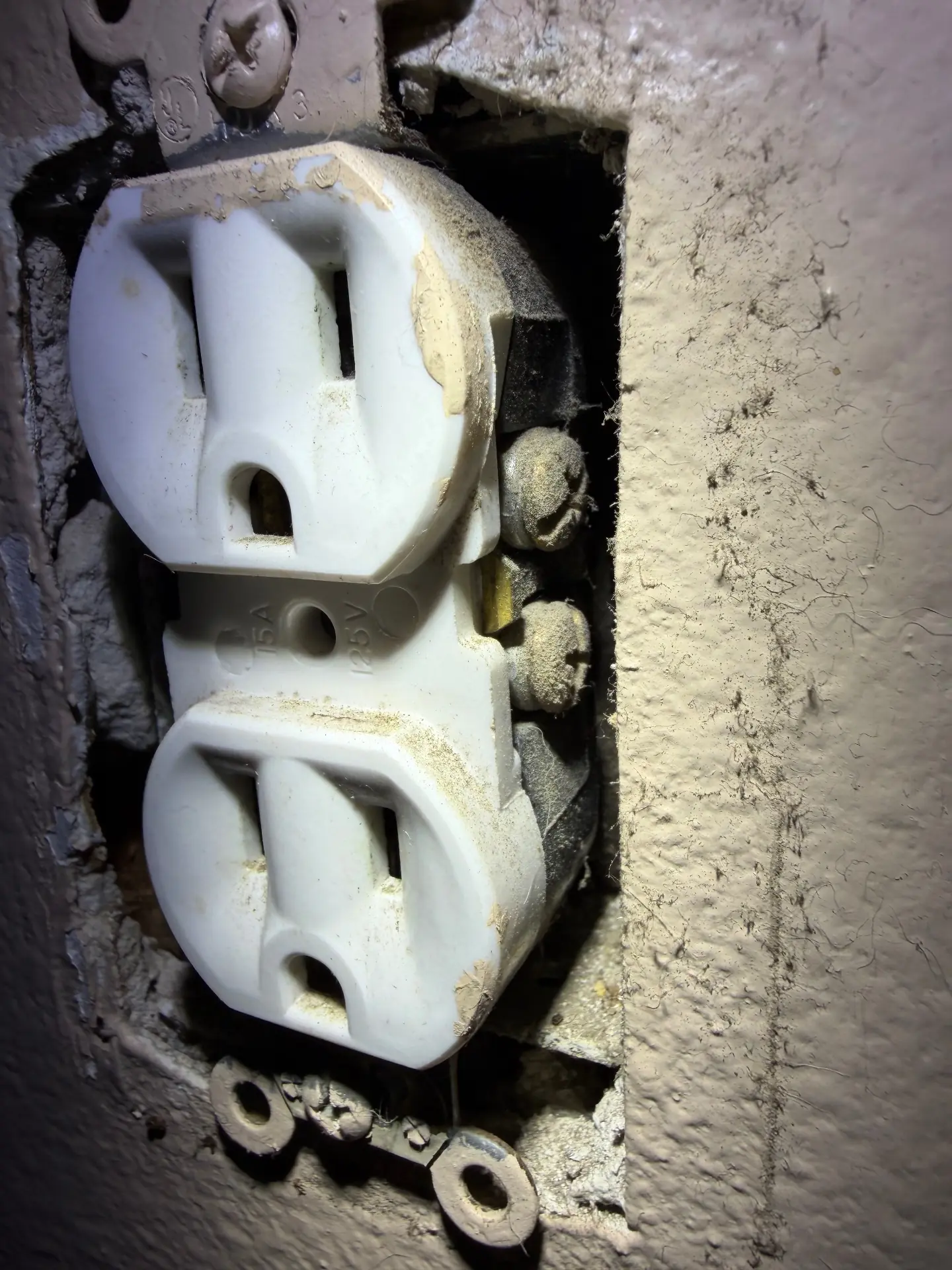
Single-strand aluminum branch wiring at 15/20A receptacles without approved CO/ALR devices or AlumiConn / COPALUM connectors
Knob-and-tube or cloth-insulated wiring
Missing knockouts, exposed splices, reverse polarity, open grounds
Panels older than ~40 years, even if "working"
Double-tapped breaker in a Challenger panel — two conductors under one lug. An automatic decline with most Florida carriers.Empty breaker slots with no filler plates — energized bus bar is exposed. Safety hazard, easy fix.Single-strand aluminum branch wiring at a 1970s-era receptacle — needs CO/ALR devices or AlumiConn pigtails to pass.
Plumbing
Polybutylene (gray) supply lines — automatic decline with most insurers
Cast iron drains showing corrosion or leaks
Water heater older than ~10 years or showing rust at fittings
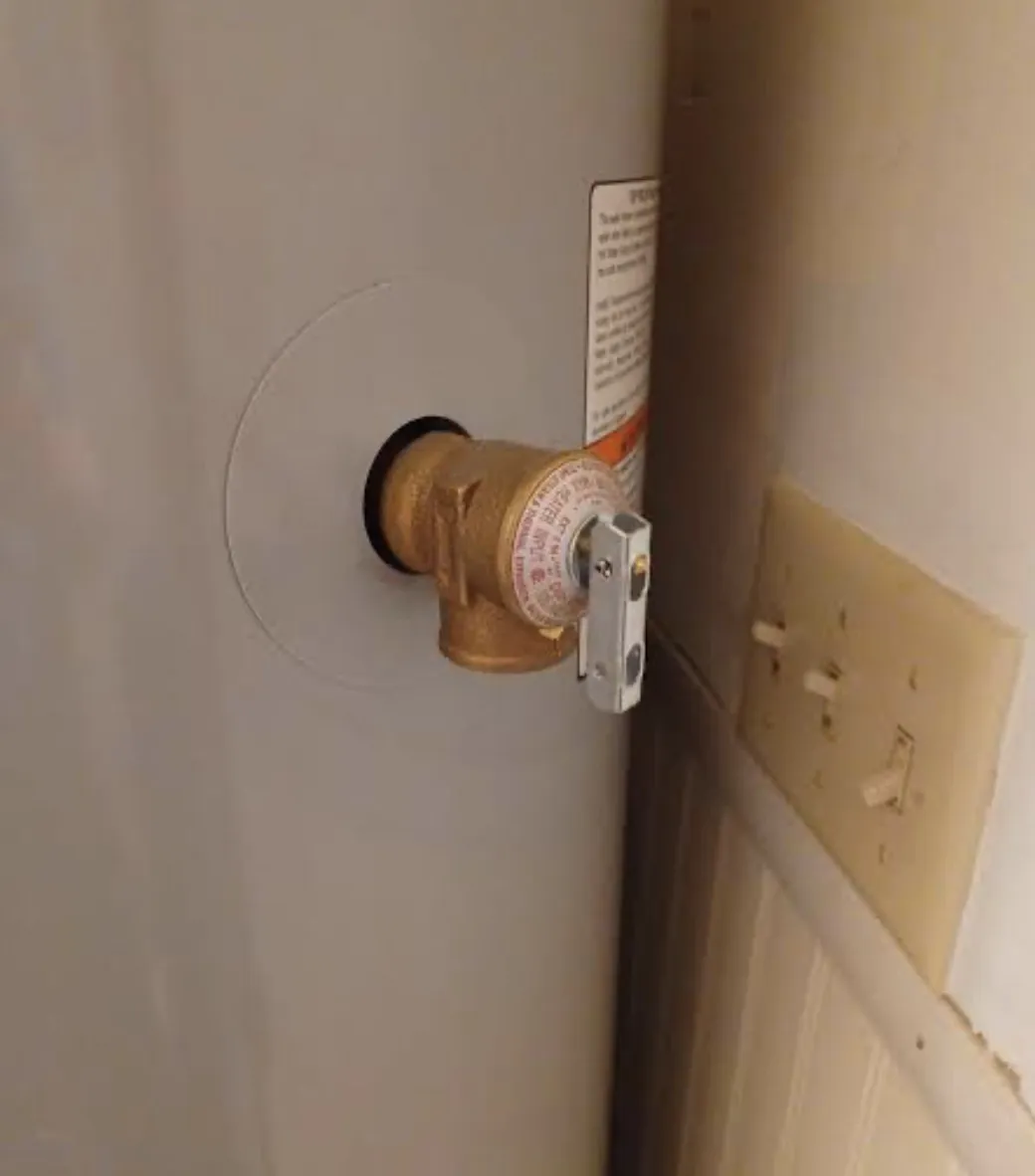
Missing TPR (temperature/pressure relief) discharge pipe on the water heater
Missing or seized valve handles under sinks, toilets, and at plumbing fixtures
Active leaks under sinks, at the heater, or at the main shutoff
Water heater TPR valve with no discharge extension pipe — code requires it to terminate within 6" of the floor.
HVAC
System older than ~15 years
Refrigerant leaks, frozen coils, or no cooling at the supply registers
Most of these are fixable — a panel swap, water heater replacement, or a few shingle repairs are often cheaper than a year of premium increases. If you're not sure where your home stands, book a 4-point and we'll tell you exactly what we see before you submit it to your carrier.
Need an inspection in Pinellas County?
Insurance-ready reports emailed within one business day.